
A History of Mind Readers · Part 3 of 9
Dunninger
The Master Mind of Mental Mystery
28 April 1892 - 9 March 1975
For a generation of Americans, mind reading had a single face and a single voice, and they belonged to Joseph Dunninger. Long before television sets were common and decades before Derren Brown was born, Dunninger walked into the nation's living rooms through the loudspeaker of the wireless and told strangers what they were thinking. He was the first mentalist to grasp that the new broadcast media were not a threat to mystery but its greatest stage, and he used them to become one of the most famous entertainers in the world. He was also, in the same breath, one of its most determined sceptics, a man who spent his life proving that the marvels he performed owed nothing whatever to the spirit world.
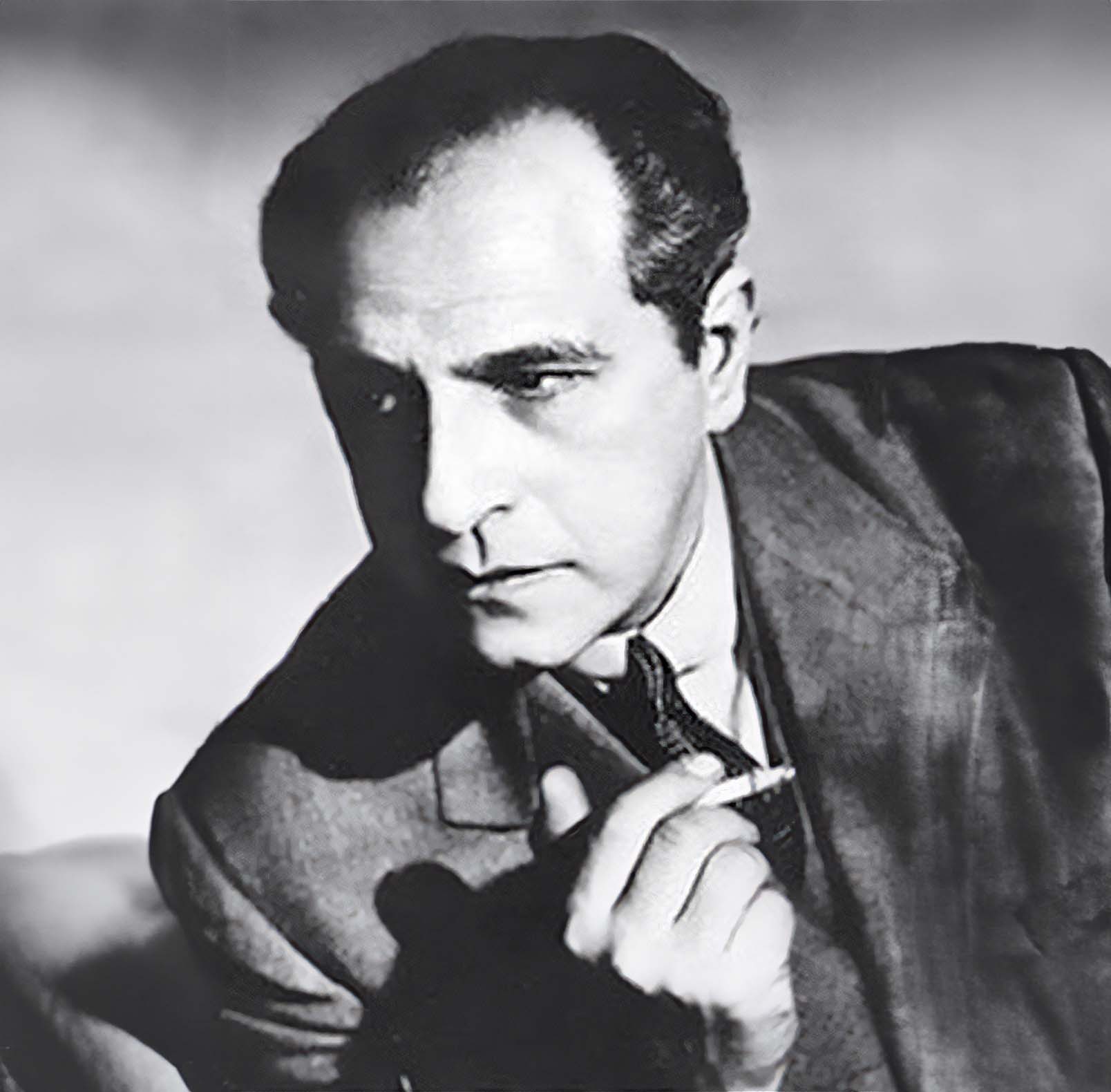
A Boy from the Lower East Side
Joseph Dunninger was born on 28 April 1892 on the Lower East Side of Manhattan, the son of German immigrant parents of modest means; his father worked as a tailor. As a small boy in 1898 he saw the great magician Harry Kellar perform, and the encounter lit a fire that never went out. He taught himself conjuring from a book, practised relentlessly, and was performing semi-professionally by his late teens. The trajectory from there was remarkable for a child of the tenements. By the age of seventeen he was sufficiently accomplished, and sufficiently bold, to be invited into the homes of the powerful.
Among his early admirers were two of the most celebrated Americans of the age: he performed at the Oyster Bay home of Theodore Roosevelt and at the home of the inventor Thomas Edison, both of whom became genuine enthusiasts. It was an early sign of a gift that would define his career, the ability to fascinate not merely the paying public but the most powerful and sceptical minds of his time.
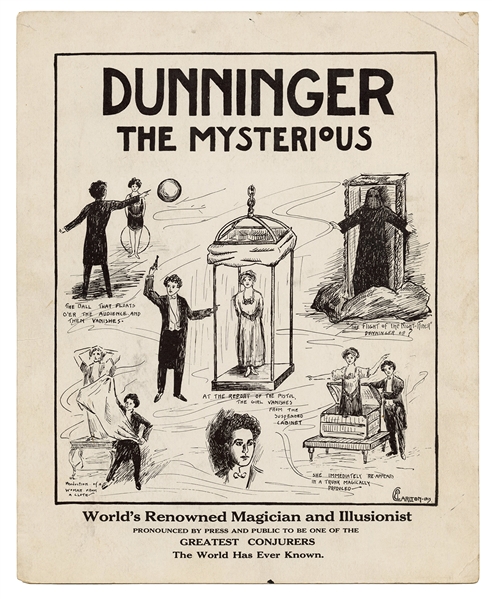
Dunninger the Mysterious
Dunninger's first fame came not as a mind reader but as a magician and illusionist in the grand manner. Billed as "Dunninger the Mysterious," he presented a full evening of conjuring: levitations, vanishes, cabinet illusions and the large-scale spectacle that vaudeville audiences craved. He played New York's Eden Musée for an astonishing fifty-seven weeks in 1913 and 1914, appeared at the Hippodrome in 1921 and reached the Palace, the summit of American vaudeville, by 1926. He headlined the Keith-Orpheum circuit and was constantly in demand for private entertainments in the houses of the rich.
Dropping the Boxes: The Birth of the Solo Mentalist
Somewhere around 1920 Dunninger made the decision that would shape the rest of his life, and arguably the future of his art. He noticed that the mental portions of his act, the moments when he appeared to divine a spectator's secret thought, produced a reaction far deeper than any vanish or production. Audiences could enjoy a clever illusion; but mind reading unsettled them, because it seemed to reach into the one place they believed to be private. So he made a bold commercial gamble. He put away the boxes and the apparatus and rebuilt his entire act around mentalism alone.
Crucially, he did so as a solo performer. The mentalism of the period was dominated by two-person "code" acts, in which a blindfolded performer named objects relayed in secret by a partner working the room. Dunninger swept all that aside. Standing alone on the stage, taking sealed questions and unspoken thoughts directly from the audience, he created the template of the single, commanding mind reader that almost every mentalist still follows today. It was a riskier and far more impressive proposition, and it set him apart from every rival on the circuit.
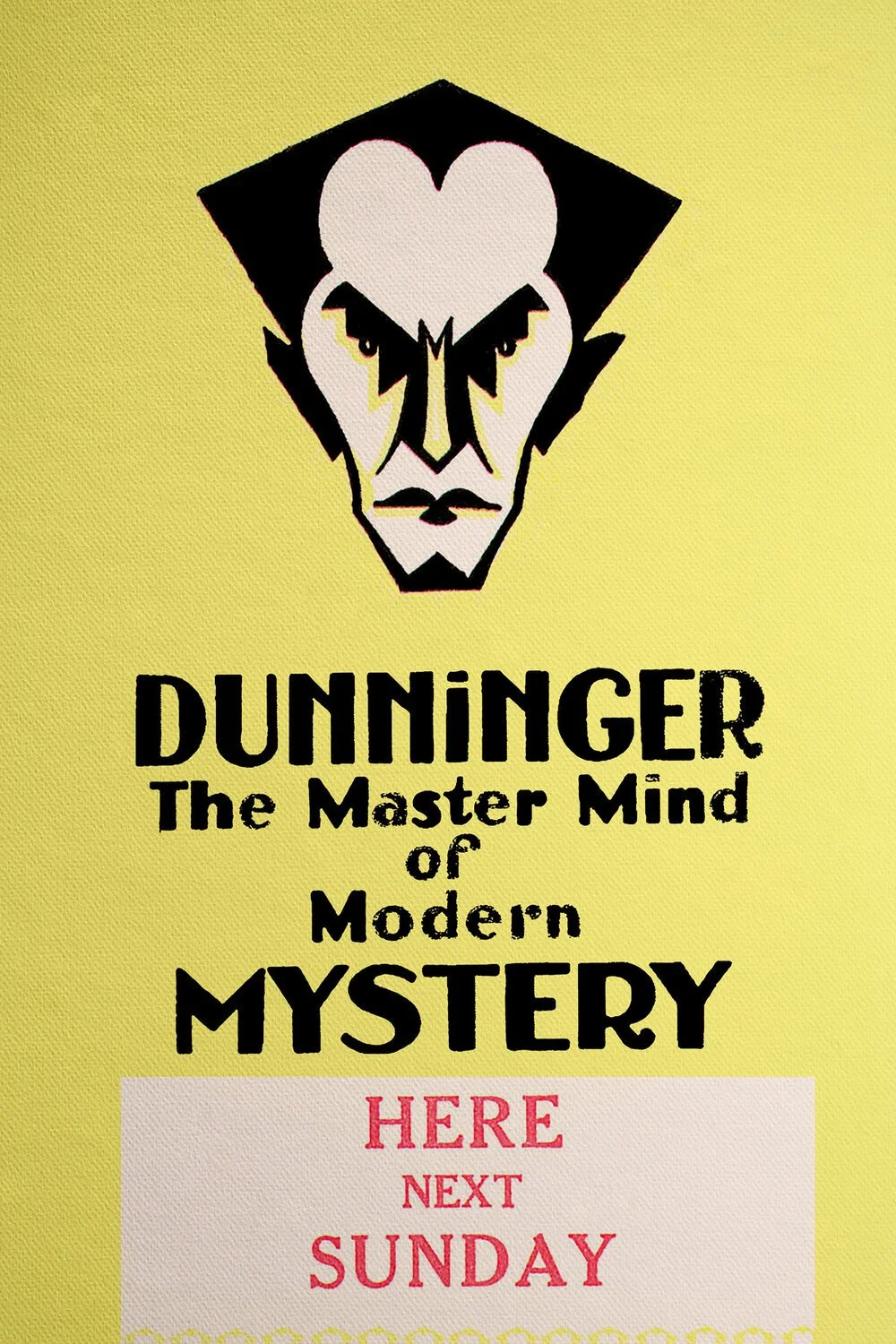
The War on the Fraudulent Medium
Dunninger's reinvention coincided with the great age of spiritualism, when grieving families paid mediums to summon the voices of the dead. Like his friend Harry Houdini, and alongside the illusionist Howard Thurston, Dunninger was outraged by the trade. He knew exactly how the rappings, the floating trumpets and the ectoplasm were produced, because he could produce them himself, and he made it his mission to expose the charlatans who preyed on the bereaved. He amassed thousands of investigative case files and wrote extensively on the methods of fraudulent mediumship.
To dramatise the campaign he issued one of the most famous challenges in the history of entertainment. Through Scientific American magazine and the Universal Council for Psychic Research, he offered $10,000, a vast sum at the time, to any medium who could produce by genuine psychic means a single phenomenon that he could not reproduce by ordinary trickery. He often declared that he would happily raise the figure to $100,000. The money was never claimed. The same standing challenge attached to his own performances: $10,000 to anyone who could prove that he employed paid confederates or "stooges" planted in the audience. That, too, went unclaimed, and the publicity was beyond price.
The Voice in Every Home: Conquering Radio
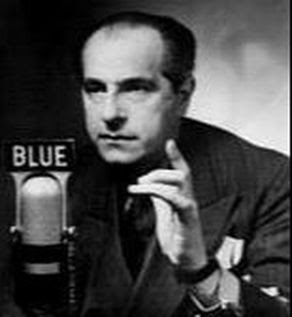
Dunninger experimented with radio as early as 1929, but it was in 1943 that he conquered it. A mind reader on the wireless seems, at first, a contradiction, for the audience cannot see a thing. Dunninger turned that apparent weakness into his greatest strength. Stripped of all visual spectacle, the listener was left with nothing but his calm, authoritative voice describing the private thoughts of named guests and audience members, and the effect was electrifying. He could not hide behind sleight of hand, so the impossibility seemed all the purer. His programmes drew enormous national audiences and made his name a household word from coast to coast.
Television Stardom
When television arrived, Dunninger was ready. He was among the very first magical performers to make the leap, appearing on NBC as early as 1948 in Mind Reading with Dunninger, and going on to headline national series through the 1950s, most famously The Dunninger Show. Now the public could watch his face as he worked, the slight pause, the certainty, the moment of revelation, and his fame reached its height. He elevated his showpiece routines into what he called "Brain Busters," elaborate mental masterpieces built around a celebrity guest or a spectacular prediction, the methods of which baffled even his fellow magicians.
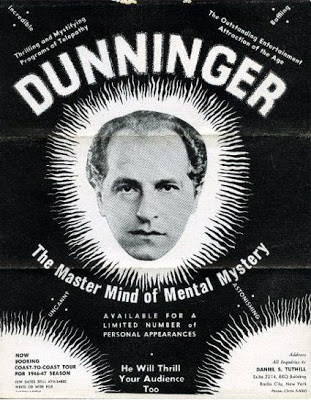
His reach extended to the very top of public life. Over his career he performed for six American presidents, including Franklin D. Roosevelt, who invited him to the White House on several occasions, as well as for Thomas Edison and Pope Pius XII. Few entertainers of any kind have read minds in such company.
The Credo
Through it all Dunninger refused to claim genuine psychic power, yet he never quite dispelled the suspicion of it either, and he liked the ambiguity. He adopted as his personal motto a line that has become inseparable from his name and is still quoted by mentalists today.
"For those who believe, no explanation is necessary; for those who do not believe, no explanation will suffice."
Joseph DunningerIt was the perfect position for a performer who was at once a showman and a sceptic. He invited belief and disbelief in equal measure, and left every member of the audience to settle the question privately, which is precisely the unease that makes great mentalism great. Of his own ability he was characteristically dry, once remarking that any three-year-old could do what he did, given thirty years of practice.
A Household Name
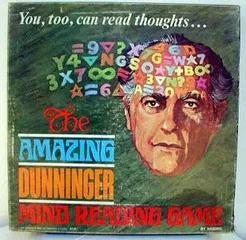
By the height of the television era, Dunninger was not merely a performer but a brand. His name sold books, magazines and merchandise. There was even a board game, "The Amazing Dunninger Mind Reading Game," which promised the family at home that "You, too, can read thoughts," a small but telling measure of how completely he had entered popular culture. Mind reading, once the preserve of the fairground booth and the darkened séance room, had become wholesome Saturday-evening fun, and Dunninger had made it so.
The Author and Authority
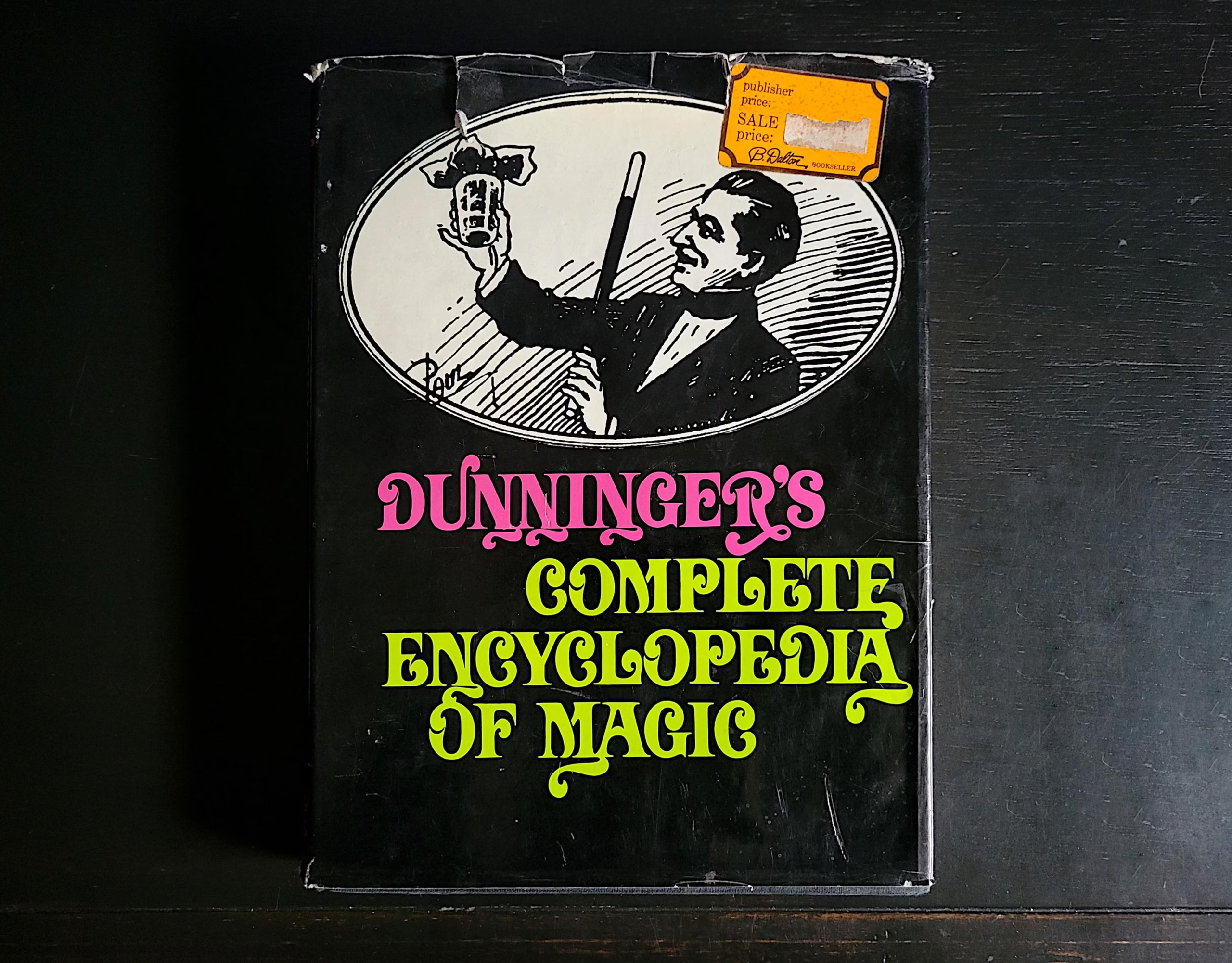
Dunninger was also a prolific and influential writer. He produced a long shelf of books across his lifetime, ranging from exposures of fraudulent mediumship to instructional works for aspiring magicians, culminating in the substantial reference volume Dunninger's Complete Encyclopedia of Magic. These books spread his methods and his sceptical philosophy far beyond the reach of any single broadcast, and they secured his standing not just as a performer but as one of the great authorities of twentieth-century magic.
Final Years
Dunninger continued to perform into the early 1970s. A final television series was recorded for ABC in 1971, but by then Parkinson's disease had taken hold, the programmes were never broadcast, and he was obliged to retire. He died at his home in Cliffside Park, New Jersey, on 9 March 1975, at the age of eighty-two. On the very day of his death he was honoured by the Academy of Magical Arts at the Magic Castle in recognition of a lifetime's work. A lifelong man of habit, he had always travelled by rail rather than air, cultivating to the end the image of an old-world showman in a wide-brimmed hat and diamond stickpin.
Legacy
Dunninger's importance is difficult to overstate. He took mentalism out of the two-person code act and made it the work of a single commanding figure; he was the first to prove that radio and television could carry mind reading to millions; and he fused the showman and the sceptic into one persona, performing miracles while insisting they were nothing of the kind. The Amazing Kreskin, who became America's best-known mentalist of the following generation, followed directly in his footsteps, and the template Dunninger built, the lone performer, the plain insistence on natural explanation, the elaborate televised set pieces, underlies the work of psychological entertainers to this day. He was, quite simply, the man who made mind reading famous.
The original version of this article appeared in The Magic Circular, the official journal of The Magic Circle.
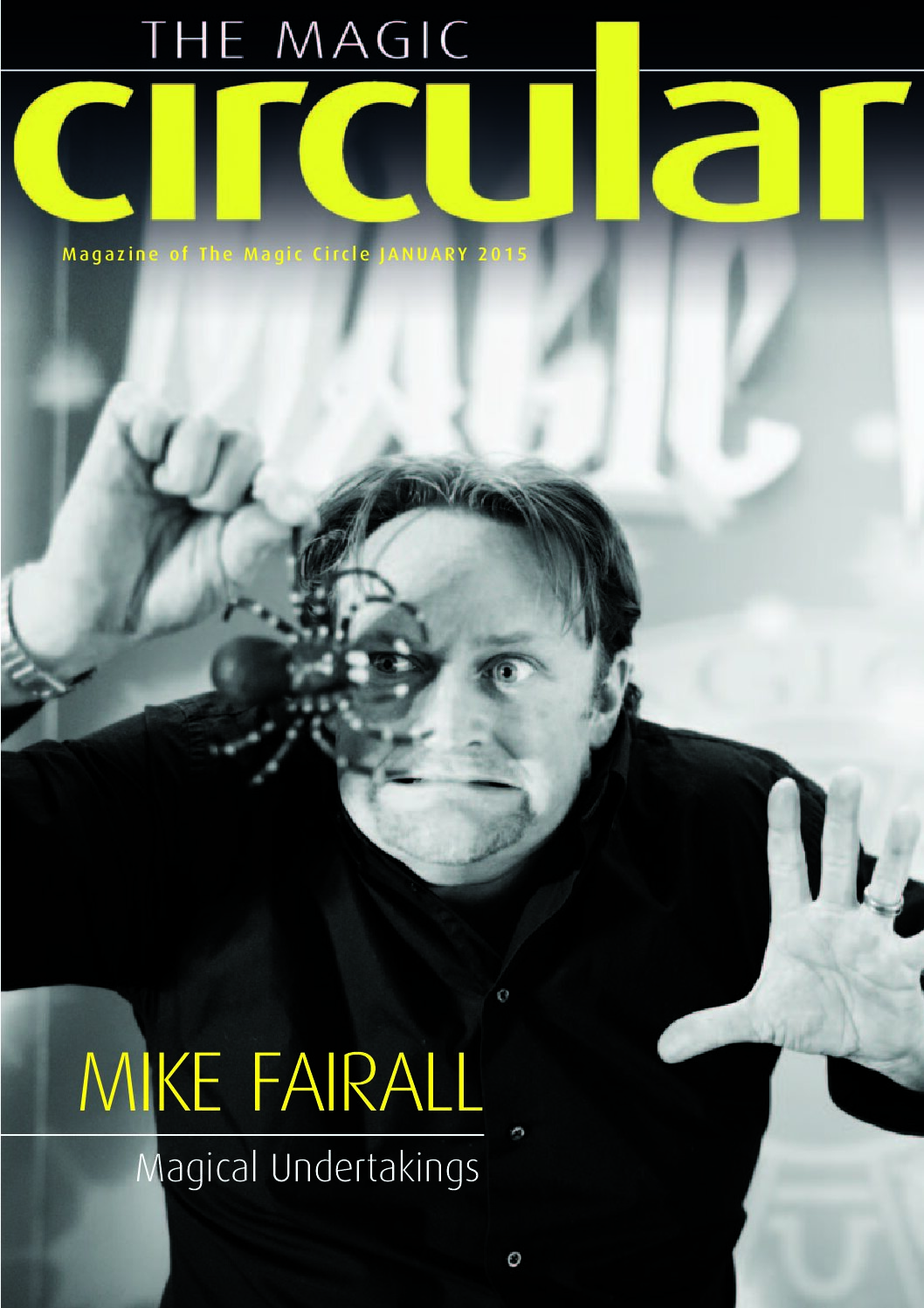
Original Magic Circular Article
Read the Joseph Dunninger feature as originally published in The Magic Circular, January 2015.
Further Reading
- Dunninger, Joseph. Dunninger's Complete Encyclopedia of Magic.
- Dunninger, Joseph. Inside the Medium's Cabinet (1935).
- Dunninger, Joseph. What's On Your Mind?
- Gibson, Walter B. The Original Houdini Scrapbook (for the Houdini and Dunninger crusades against fraudulent mediums).
Experience Mind Reading for Yourself
Roberto Forzoni carries on the tradition of these great performers, bringing psychological magic and mind reading to events across London and the world.
Check Availability