
For someone who was a media icon throughout her life, who astonished Albert Einstein, read the future for President Franklin Roosevelt and for countless American governors, senators and mayors, it is surprising how little Gene Dennis is remembered today. Alongside Joseph Dunninger, she was the best-known psychic performer in America through the 1920s and 1930s, and one of the most talked-about stars of the era.
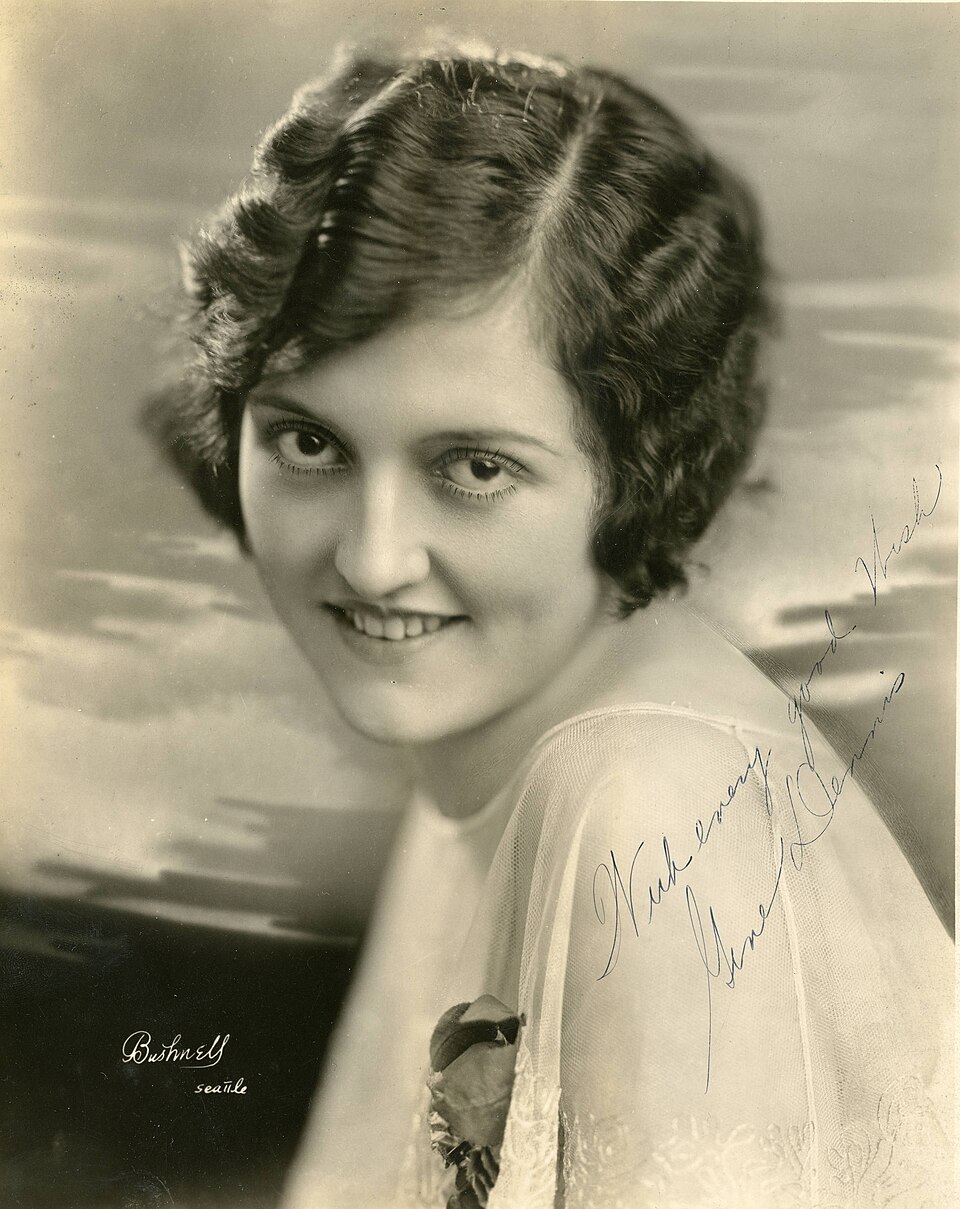
Hers is the remarkable story of a beautiful young woman who rose from small-town Kansas prodigy to national favourite, sustaining a long career of live appearances, radio shows and international headlines. The newspapers adored her film-star glamour and ran one long-lashed beauty shot after another. She performed on two continents, became the first psychic to broadcast on British radio, and finally married a multimillionaire and left the stage.
The Kansas Prodigy
Eugenie Dennis was born in Topeka, Kansas, in 1904, and raised in a modest home by her parents Nannie and Frank, a pattern maker for a locomotive upholstery firm, before the family moved to nearby Atchison. Her mother held that her own mother had been psychic, able to see pictures and find lost things, and the belief plainly shaped young Gene, who, it was said, could talk at ten months and spoke of seeing visions by the age of two. When she was about eight, a visit from a local tailor named Ike Gilberg changed her life. A philanthropist fascinated by Jewish metaphysics, Gilberg had helped the family through her father's illness; struck by the child's poise and insight, he told her mother the girl was psychic and should develop her gift.
A Star is Found
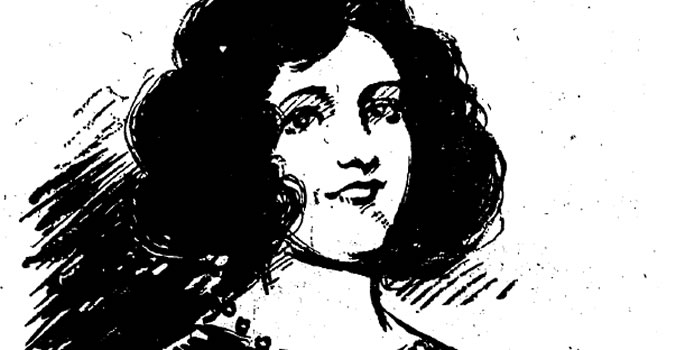
Gene took the assessment to heart, giving readings for friends and becoming known at school for finding her classmates' lost belongings. At fourteen she was invited to read for the guests at a grand reception, only for her statements to prove a little too truthful, and she was escorted out past a roomful of embarrassed neighbours. A few years later a man asked her where to find a missing thousand dollars; when she named the spot correctly, he took the story to the press, and the Kansas City Star of 8 May 1921 made her famous overnight. Over a thousand letters arrived, many stuffed with dollar bills, and soon the girl was giving readings to a stream of visitors at her parents' little five-room cottage. The fame and responsibility weighed heavily on the teenager, who would often grow tearful at being unable to answer everyone, while headlines such as the Minneapolis Star's "Mysterious Exploits of a 16-year-old Mind-Reader" spread her name ever wider.
David Abbott and the Answer With No Question
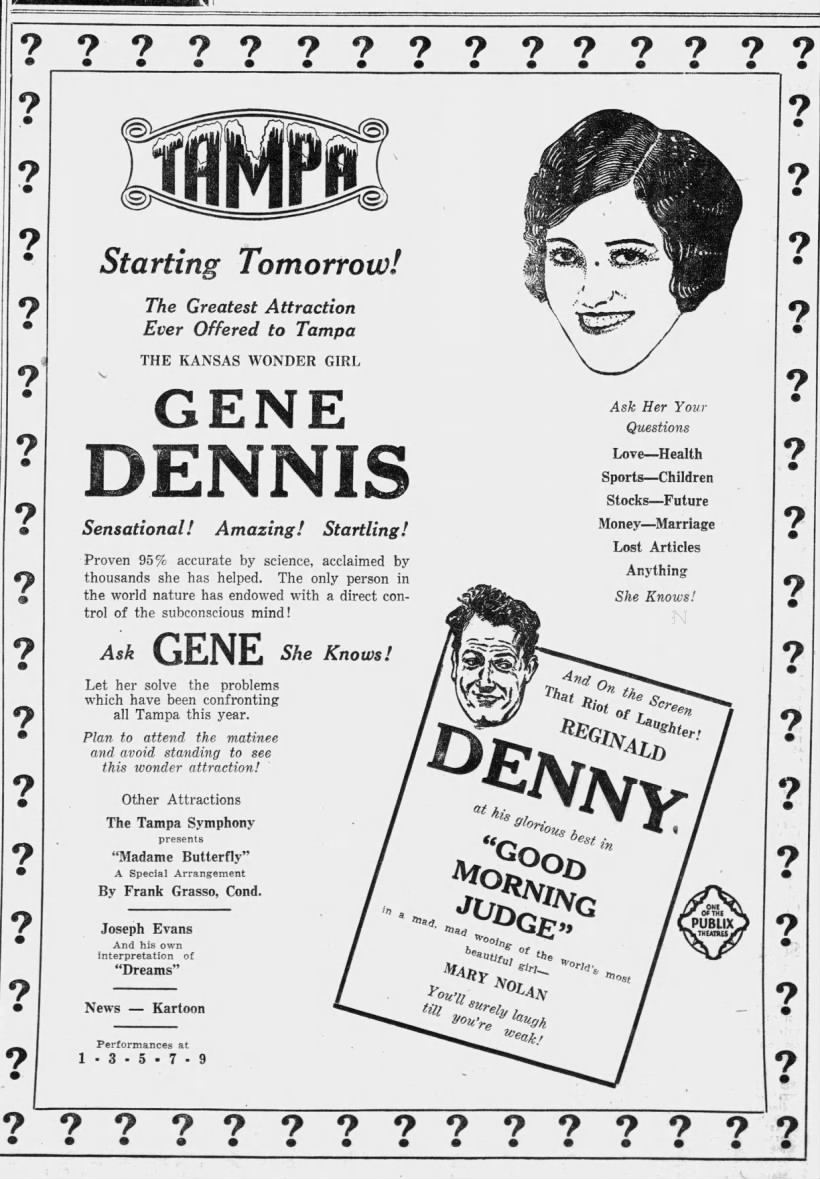
The publicity brought her to David P Abbott, a respected investigator of psychics and a magician of some standing, who invited her to Omaha to be tested, the trip funded by the Kansas City Star. At their first meeting in January 1922 she asked a woman whether she had recently lost a child; the woman confirmed it and broke down. Abbott concluded that while some of Gene's hits were near-miraculous, much of her work was guesswork and cold reading, and her record at finding lost objects no better than chance. Yet he and his wife became genuine friends with her, finding her warm and supportive of her sitters rather than exploitative, and noting that she never claimed to consult spirits or fall into a trance. Abbott arranged for her to give readings at the local Rialto Theatre, where the houses were packed, and her stage career began in earnest. As Max Maven later observed, Gene's masterstroke was a question-and-answer act with the answer alone and no question: where other mind readers laboured to divine each sealed query before answering it, Gene simply invited spectators to stand and ask aloud, then answered at once, dispensing with carbon paper, billet switches and hidden earpieces entirely. To the audience, the answer was the whole of the magic.
The Predictions Machine
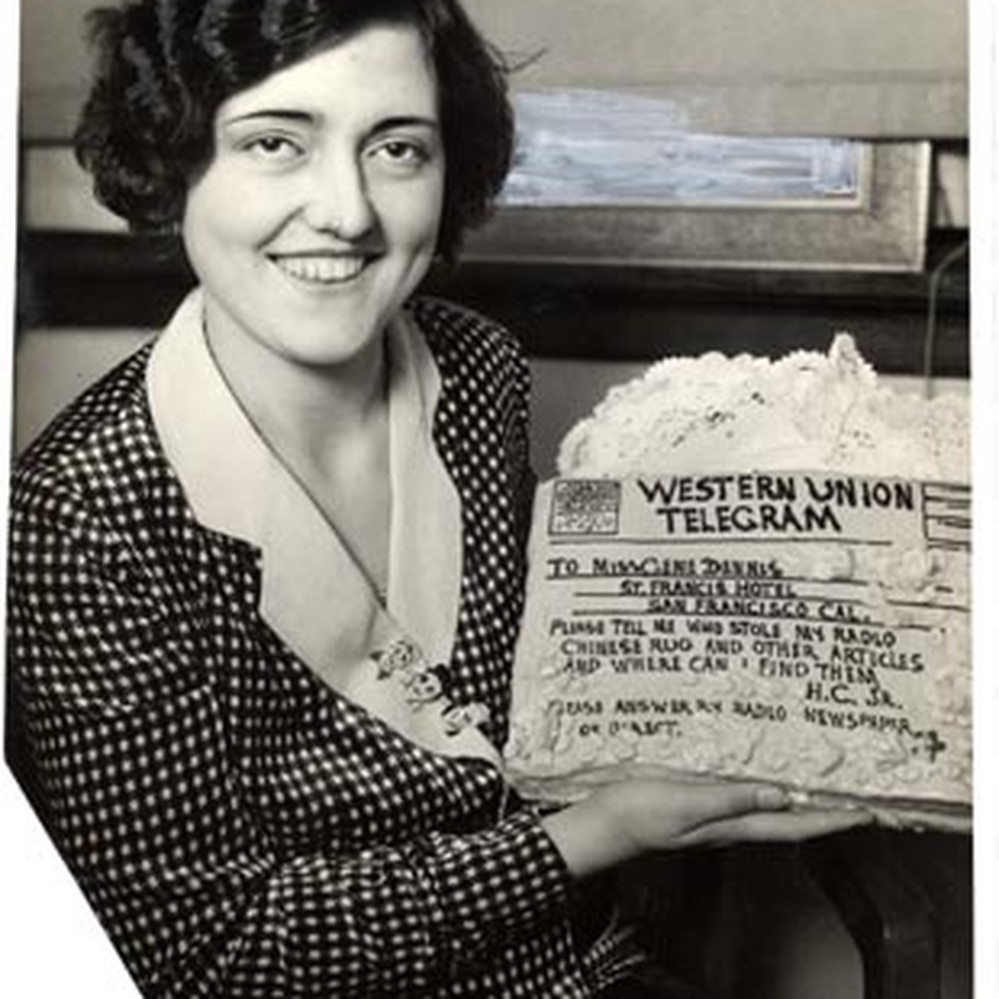
Gene quickly grasped how eagerly the papers printed predictions, especially about crime, and exploited it to the full; a premonition of murder given at Abbott's house seemed borne out when a policeman was killed that night, and the press rarely troubled to report the predictions that missed. Her manager, George Davidson, devised publicity stunts to match, among them a blindfold flight she was said to navigate from New York to Washington, and announcements of a fifty-two-thousand-dollar-a-year motion-picture deal that never came to anything. Sir Arthur Conan Doyle was reported to have called her one of the Seven Wonders of the World, while Houdini, ever the sceptic, devoted part of his radio show "Ghosts That Talk by Radio" to explaining her supposed methods, alleging concealed accomplices and earpieces.
Her mother had at first acted as her manager, but the role soon passed to the nineteen-year-old George Davidson, whose schemes grew ever bolder. For a spell Gene stepped back from the stage altogether to play the stock market, returning in 1929 after the Wall Street crash, though she liked to claim she had pulled her own money out in good time, having foreseen the collapse. In 1930 she signed a prestigious two-year contract with Loew's, now represented by the powerful William Morris agency. Not every prophecy landed, of course; the newspapers were happy to print her forecast that an earthquake would flatten Los Angeles, and rather less interested in reporting that it never came, a convenient asymmetry she understood and exploited to the full.
Einstein, and Reading for the President
Part of Gene's appeal was that she looked nothing like the solemn turbaned soothsayer; she was the glamorous girl next door, and indeed objected to being called a mystic or mind reader at all. Her greatest endorsement came on 13 January 1932, when the Chicago Herald Examiner ran Albert Einstein's astonished verdict across its front page after he had spent several hours with her: she had told him things no one could possibly know, he said, things on which he had been working, and shown a power to do things he could not explain. A year later the Warner Circus signed her to a forty-week contract at two thousand dollars a week, and her standing was such that she read for President Franklin Roosevelt at a White House dinner.
Britain, Marriage and a Final Curtain
Her fame reached Europe, and in 1934 she travelled to London for bookings and radio interviews, becoming the first psychic to appear on British radio; she was much loved by British audiences and was even said to have correctly predicted the winner of the Derby. In 1935 the thirty-one-year-old Gene secretly married John G Von Herberg, the wealthy Seattle owner of several theatres, and the couple went on to have five children. Though her husband curtailed her stage work, she kept her hand in, writing a column for the Seattle Star and editing a self-help magazine, and giving the occasional prediction. Von Herberg died in 1947, and barely three months later, on 8 March 1948, Gene herself died, aged just forty-four, her doctors recording a cerebral oedema. Her friends, who believed she passed grief-stricken, felt that a struggle with alcohol may also have contributed to so early an end.
Legacy
For two decades, alongside Dunninger, Gene Dennis was the most famous psychic performer in America, and her great contribution to the art was that elegant simplification, the answer offered without the question, which stripped mentalism of its apparatus and put the performer's apparent insight centre stage. Warm where others were forbidding, glamorous where others were grave, she made the mind reader a star of the popular press. Her run of favourable publicity was briefly checked when a disgruntled client, given an inaccurate reading, complained and she was served with a summons for fortune-telling, then unlawful in many states; she was fined twenty-five dollars, the court's leniency owing something to the police officers who testified that she had helped them solve a number of cases. Much of what we know of her early testing survives thanks to David Abbott, whose account is preserved in the volume House of Mystery.
Frequently Asked Questions
Who was Gene Dennis?
Gene Dennis (1904-1948), born Eugenie Dennis, was an American psychic entertainer billed as "The Wonder Girl." With Joseph Dunninger she was the best-known psychic performer in America through the 1920s and 1930s.
Did Gene Dennis really amaze Albert Einstein?
Einstein's praise was widely reported. After spending several hours with her, he was quoted on the front page of the Chicago Herald Examiner in 1932 saying she had told him things no one could possibly know.
What was unusual about her act?
As Max Maven noted, she performed a question-and-answer act with the answer alone. Rather than secretly divining sealed questions, she had spectators ask aloud and answered immediately, doing away with the usual hidden apparatus.
Was Gene Dennis a genuine psychic?
The investigator David Abbott found some striking hits but judged much of her work to be cold reading and guesswork. Notably, she never claimed to consult spirits or to enter a trance.
What happened to Gene Dennis?
She married the wealthy theatre owner John G Von Herberg in 1935 and largely retired. She died in 1948, aged forty-four, only months after her husband.

From The Magic Circular
This profile is adapted and expanded from Roberto Forzoni's original feature in The Magic Circular, the journal of The Magic Circle, March 2016.
Sources & Further Reading
- Teller and Todd Karr. House of Mystery: The Magic Science of David P Abbott (The Miracle Factory, 2005).
Experience Mind Reading for Yourself
Roberto Forzoni carries on the tradition of these great performers, bringing psychological magic and mind reading to events across London and the world.
Check Availability